
Category

California Law

Hit By A Stolen Car In California? What To Do After A Stolen Vehicle Accident

Hit By A Stolen Car In California? What To Do After A Stolen Vehicle Accident

California Law, Personal Injury

Being involved in a car accident is stressful enough. Finding out that the vehicle that hit you was stolen can make the situation even more confusing.

If you were hit by a stolen car in California, you may have questions about who is responsible for your injuries, whether the vehicle owner can be held liable, and how you can pay for medical treatment and other losses.

A stolen vehicle accident can involve several different legal and insurance issues. The person driving the stolen vehicle may be responsible for causing the collision, but recovering compensation can become more complicated if the driver is uninsured, unidentified, or unable to pay for the damages.

If you were injured in a crash involving a stolen vehicle in Orange County, understanding your rights and insurance coverage is an important first step.

What Should You Do After Being Hit By A Stolen Car?

Your first priority after any accident should be your safety and medical needs.

If you are able to do so safely, move away from traffic and call 911. If you or anyone else has been injured, request emergency medical assistance.

You should also report the collision to law enforcement. This is especially important when the other vehicle was stolen. The police report may document the circumstances of the crash, information about the vehicle, the identity of the driver if known, and information about the vehicle’s stolen status.

The California Department of Insurance recommends stopping at the scene, contacting law enforcement, obtaining information from drivers and witnesses when possible, documenting the accident scene, and notifying your insurance company.

If you can safely do so, consider gathering:

  • The stolen vehicle’s license plate number
  • The make, model, and color of the vehicle
  • Photographs of the accident scene
  • Photographs of damage to your vehicle
  • Names and contact information for witnesses
  • The police report or report number
  • Medical records and bills
  • Information about missed work
  • Any photographs or video from nearby businesses or traffic cameras

Do not put yourself in danger trying to obtain information. If the person who was driving the stolen vehicle fled the scene, provide law enforcement with whatever information you have.

Who Is Responsible If A Stolen Car Hits You?

One of the most important questions after a stolen vehicle accident is who can be held financially responsible for your injuries and losses.

Generally, the driver who caused the accident may be personally responsible for the harm they caused. However, a stolen vehicle creates an important distinction because the vehicle owner may not have given the driver permission to use the vehicle.

Vehicle ownership alone does not necessarily mean that the vehicle owner is responsible for an accident caused by someone who stole the vehicle. The specific facts matter, including how the vehicle was taken, whether anyone gave the driver permission to use it, and whether there are other circumstances that could create liability.

This is one reason a stolen vehicle accident in California can require a more detailed investigation than an ordinary car accident.

An attorney may need to investigate the police report, vehicle ownership, insurance policies, witness statements, available surveillance footage, and the circumstances surrounding the theft.

What If The Driver Of The Stolen Car Is Uninsured?

Insurance coverage can become particularly important when you are hit by a stolen car.

California requires drivers and vehicle owners to maintain financial responsibility, and California auto insurance policies commonly include uninsured and underinsured motorist coverage.

Uninsured motorist bodily injury coverage can provide protection when you are injured in a collision caused by an uninsured driver. California Department of Insurance guidance explains that uninsured motorist coverage may apply when the other driver does not have liability insurance.

This can be especially important in a stolen vehicle accident because the person driving the vehicle may not have valid insurance coverage of their own.

Your own policy may contain coverage that could help with your injuries, depending on the circumstances and the specific terms of your policy.

Do not assume that you have no options simply because the stolen vehicle driver does not have insurance.

Can You Use Uninsured Motorist Coverage After A Stolen Car Accident?

Possibly.

Uninsured motorist coverage is designed to provide certain benefits when an at-fault driver does not have liability insurance. California also recognizes uninsured motorist property damage coverage under certain circumstances.

Whether your coverage applies after a stolen vehicle accident depends on the circumstances and the language of your insurance policy.

For example, questions may include:

  • Was the driver identified?
  • Was the stolen vehicle insured?
  • Did the vehicle owner’s policy provide applicable coverage?
  • Do you have uninsured motorist bodily injury coverage?
  • Do you have collision coverage?
  • Were you a passenger in your vehicle?
  • Did you suffer injuries?
  • Was the stolen vehicle driver at fault for the collision?

Your insurance policy is a contract, so the specific policy language matters.

What Compensation May Be Available After A Stolen Vehicle Accident?

If another person’s negligence caused your injuries, you may be able to seek compensation for losses associated with the accident.

Depending on the circumstances, damages may include:

  • Emergency medical treatment
  • Hospital bills
  • Follow-up medical care
  • Physical therapy
  • Prescription medications
  • Lost wages
  • Reduced earning capacity
  • Vehicle repairs
  • Other property damage
  • Pain and suffering
  • Emotional distress
  • Other accident-related losses

The types and amount of compensation available depend on the facts of the accident, the injuries involved, applicable insurance coverage, and California law.

A stolen vehicle does not automatically mean that an injured person has no path to compensation. Instead, it can make determining the appropriate source of compensation more complicated.

What If The Stolen Car Driver Flees?

A stolen vehicle accident can also become a hit-and-run case if the driver leaves the scene.

If the driver flees, contact law enforcement immediately and provide as much information as possible. License plate information, vehicle descriptions, photographs, witness statements, nearby surveillance footage, and other evidence may help investigators identify the vehicle or driver.

You should also notify your insurance company about the accident.

California’s Department of Insurance recommends promptly notifying your insurance company after an accident and documenting your injuries, medical expenses, lost wages, and other losses when making an uninsured motorist claim.

Do Not Assume The Insurance Company Will Handle Everything

After a serious accident, you may receive calls from insurance representatives asking for information about the collision.

You should cooperate with your insurer as required by your policy, but you should also understand what you are being asked to provide and what you may be agreeing to.

The California Department of Insurance recommends reading your policy, notifying your insurer after an accident, and asking questions when you do not understand the claims process.

If you suffered significant injuries, have substantial medical bills, or are unsure which insurance coverage applies, speaking with a personal injury attorney can help you understand your legal options before making important decisions about your claim.

Why A Stolen Vehicle Accident Can Be Complicated

A typical car accident may involve two drivers and their insurance companies. A stolen vehicle accident can involve considerably more questions.

An investigation may need to determine:

  1. Who owned the vehicle?
  2. When and how was the vehicle reported stolen?
  3. Who was driving it?
  4. Was the driver identified?
  5. How did the driver obtain the vehicle?
  6. Who caused the collision?
  7. What insurance policies may provide coverage?
  8. What injuries and financial losses resulted?
  9. Was the accident also a hit-and-run?
  10. Are there witnesses, surveillance footage, or other evidence that could help establish what happened?

These questions can affect where a claim is made and what sources of compensation may be available.

What If You Were Injured As A Passenger?

If you were a passenger in another vehicle and were injured when a stolen car crashed into you, you may still have options for pursuing compensation.

Your own auto insurance policy may provide certain protections, including uninsured motorist coverage, depending on the policy and circumstances. California Department of Insurance guidance explains that uninsured motorist bodily injury coverage can cover injuries to you and people in your vehicle when an uninsured driver is at fault.

You should not assume that the fact that the other vehicle was stolen eliminates your ability to pursue a claim.

What If You Were Driving A Motorcycle Or Riding A Bicycle?

People outside a passenger vehicle can be particularly vulnerable in collisions involving another vehicle.

If a stolen car hits a motorcycle, bicycle, or pedestrian, injuries can be severe even when the collision happens at relatively low speeds.

The same basic steps apply: seek medical attention, report the accident, document the scene if it is safe, preserve evidence, and notify the appropriate insurance companies.

For a serious injury, an attorney can help investigate how the collision occurred and identify potentially applicable sources of compensation.

Why Medical Documentation Matters

Some accident injuries are immediately obvious. Others may become more apparent hours or days after a collision.

After being hit by a stolen car, seek medical attention if you are experiencing pain, dizziness, headaches, numbness, limited movement, or other symptoms.

Keep records of your medical appointments, treatment recommendations, prescriptions, expenses, and time missed from work.

Medical documentation can also help establish the connection between the collision and your injuries.

Do not minimize an injury simply because you were able to walk away from the accident scene.

How An Orange County Personal Injury Lawyer Can Help

If you were injured after being hit by a stolen car in Orange County, determining what happened is only part of the process.

A personal injury attorney may investigate the collision, review the police report, identify potentially applicable insurance coverage, gather evidence, communicate with insurance companies, and evaluate the losses associated with your injuries.

At Fielding Law, our attorneys represent people injured in motor vehicle accidents throughout Orange County and California. We handle negligence-based and intentional acts involving car accidents, motorcycle accidents, pedestrian and bicycle accidents, and other serious personal injury matters.

Every stolen vehicle accident is different. The fact that a vehicle was stolen does not by itself determine who may be legally responsible or what insurance coverage may be available.

What To Do If You Were Hit By A Stolen Car In Orange County

If you have been injured in a stolen vehicle accident, consider taking these steps:

Seek medical attention. Your health comes first.

Report the accident. Contact law enforcement and make sure the stolen vehicle and circumstances of the collision are documented.

Document the accident. Photograph the vehicles, roadway, visible injuries, and surrounding area when it is safe to do so.

Preserve evidence. Keep medical records, bills, repair estimates, photographs, witness information, and other accident-related documents.

Notify your insurance company. Your policy may provide coverage that becomes important after an accident involving an uninsured driver.

Review your insurance coverage. Uninsured motorist, underinsured motorist, collision, medical payments, and other coverage may have different requirements and limitations.

Consider speaking with an attorney. If you suffered serious injuries or the insurance issues are complicated, legal guidance may help you understand your options.

Get Help After A Stolen Car Accident In Orange County

Being hit by a stolen car in California can leave you dealing with injuries, medical bills, vehicle damage, lost income, and uncertainty about who is responsible.

You do not have to figure out the insurance and legal issues on your own.

Fielding Law helps injured people understand their legal options after serious car accidents in Orange County and throughout California. Our attorneys can review the circumstances of your accident and help determine what claims and insurance coverage may apply.

If you were injured in a stolen vehicle accident, contact Fielding Law for a free, 24/7 consultation with no obligation. Call 833.88.SHARK.

Fielding Law, APC – Irvine, CA Office
505 Technology Dr Ste 250
Irvine, CA 92618
(949) 288-5484


Fielding Law, APC – Phoenix, AZ Office
2 N Central Ave Ste 1800
Phoenix, AZ 85004
(859) 578-4444

Note: Information provided is for educational purposes and does not constitute legal advice. Always consult with a qualified attorney for legal concerns.

BLOG HOME
Does Insurance Cover an Accident With a Stolen Vehicle?

Does Insurance Cover an Accident With a Stolen Vehicle?

California Law, Car Accident

Being involved in a car accident is stressful enough. Finding out that the vehicle that hit you was stolen can make an already difficult situation even more confusing. You may immediately wonder who is responsible for your injuries, who will pay for your vehicle damage, and whether insurance will cover an accident with a stolen vehicle.

In California, the answer depends on several factors, including who caused the accident, whether the stolen vehicle was insured, what coverage you have under your own auto insurance policy, and the circumstances surrounding the theft.

If you have been injured in a crash involving a stolen vehicle, understanding your insurance coverage and legal options can be important.

What Happens When A Stolen Vehicle Causes An Accident?

When someone steals a vehicle and causes a collision, the person driving the stolen vehicle may not have permission from the vehicle owner to use it. This can create important questions about liability and insurance coverage.

California requires drivers and vehicle owners to establish financial responsibility. The California Department of Insurance explains that liability insurance generally covers injuries and property damage a person causes to others while operating a vehicle. California’s minimum liability limits for standard auto policies are currently $30,000 for bodily injury to one person, $60,000 for bodily injury to two or more people in one accident, and $15,000 for property damage.

However, the existence of an insurance policy on the stolen vehicle does not necessarily mean that the policy will automatically pay for every accident caused by a person who stole the vehicle.

Insurance policies contain specific terms, conditions, exclusions, and definitions. Whether a particular policy provides coverage can depend on the facts of the accident and the language of the policy.

That is why it is important to look beyond simply asking whether the stolen vehicle was insured.

Does The Stolen Vehicle Owner’s Insurance Cover The Accident?

This is one of the most common questions after a stolen vehicle accident.

A vehicle may have had an active insurance policy when it was stolen. However, that does not automatically mean the owner is personally responsible for an accident caused by the thief.

The circumstances surrounding how the vehicle was taken, whether the driver had permission to use it, and the terms of the applicable insurance policy can all matter.

California insurance law recognizes several different types of coverage, including liability, uninsured motorist, underinsured motorist, comprehensive, and collision coverage. Each type of coverage serves a different purpose.

If a vehicle was genuinely stolen and the thief was driving it without the owner’s permission, determining whether the owner’s policy applies can require a careful review of the policy and the facts of the accident.

The injured person may therefore need to look at other potential sources of compensation.

Your Uninsured Motorist Coverage May Be Important

If the person driving the stolen vehicle does not have applicable liability coverage, your own uninsured motorist coverage may become especially important.

The California Department of Insurance explains that uninsured motorist bodily injury coverage can provide benefits when you are injured in an accident caused by an uninsured driver. Underinsured motorist coverage may also apply when the at-fault driver’s insurance is not sufficient to cover the damages.

A stolen vehicle accident can create a situation where the at-fault driver does not have insurance that will respond to the claim. In some circumstances, this can make your own uninsured motorist coverage an important source of recovery.

Uninsured motorist bodily injury coverage may help with damages related to injuries, subject to the terms and limits of the policy.

This coverage can be particularly important when an accident results in significant medical expenses, lost income, or other losses.

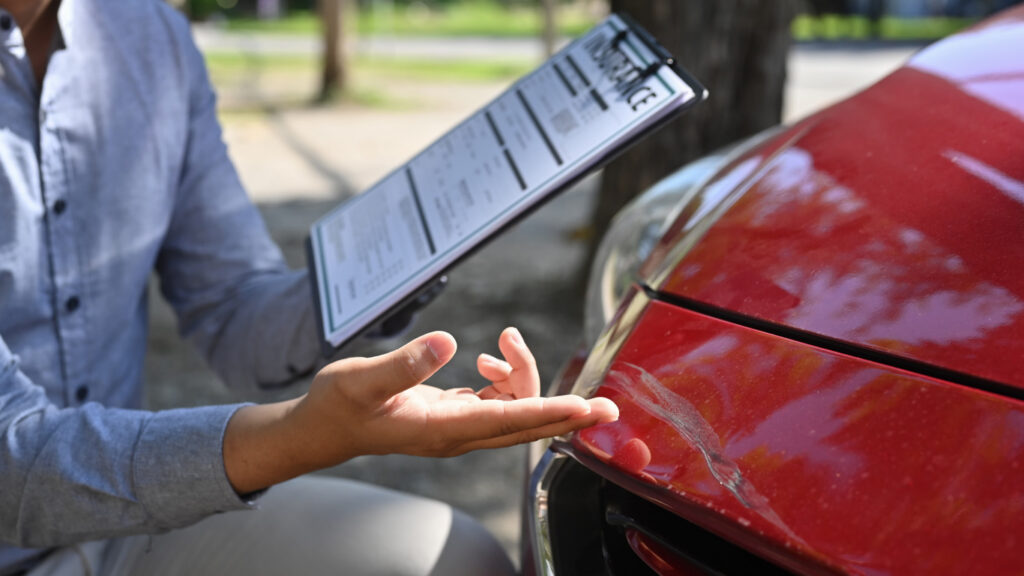
What About Damage To Your Vehicle?

In addition to injuries, a stolen vehicle accident can cause significant property damage.

Your available insurance coverage may depend on the type of policy you purchased.

California’s Department of Insurance explains that collision coverage generally pays for damage to your vehicle resulting from physical contact with another vehicle or object. Comprehensive coverage generally applies to damage caused by events other than collision, including theft, vandalism, fire, and certain other covered events.

Uninsured motorist property damage coverage may also be available in certain circumstances when an identified uninsured driver causes damage to your vehicle. The California Department of Insurance currently identifies a $3,500 limit for uninsured motorist property damage coverage.

Your specific policy determines what coverage is available, along with applicable deductibles and limits.

What If You Were Injured By A Stolen Car?

A stolen vehicle accident can cause serious injuries, including:

  • Broken bones
  • Head and brain injuries
  • Spinal cord injuries
  • Neck and back injuries
  • Internal injuries
  • Soft tissue injuries
  • Traumatic injuries requiring surgery
  • Permanent disabilities
  • Fatal injuries

The financial impact can extend well beyond the initial emergency room visit.

Depending on the circumstances, an injured person may have damages involving medical treatment, lost income, reduced earning capacity, property damage, and pain and suffering.

If you were injured because another driver was negligent, the fact that the vehicle was stolen does not mean you should automatically assume there is no legal option for recovering compensation.

The first step is determining what insurance coverage and potential sources of liability exist.

Does Uninsured Motorist Coverage Apply To A Stolen Vehicle Accident?

It can, depending on the circumstances and the terms of the policy.

The California Department of Insurance describes uninsured motorist coverage as protection for accidents involving a driver who does not have liability insurance. The department also explains that uninsured motorist bodily injury coverage can cover injuries to the insured and certain passengers when an uninsured driver is at fault.

A stolen vehicle accident may raise questions about whether the driver is considered an uninsured motorist for purposes of your policy.

This is one reason you should not assume that your claim is automatically covered or automatically denied.

Insurance companies review claims based on the facts of the accident and the applicable policy language. If an insurer tells you that you do not have coverage, it may be worth having the policy and claim decision reviewed so you understand the basis for that determination.

What Should You Do After An Accident With A Stolen Vehicle?

If you are involved in an accident involving a stolen vehicle, take steps to document what happened.

Call 911 And Report The Accident

If anyone is injured, seek emergency medical attention and call 911.

You should also notify law enforcement about the collision. A police report may be particularly important when the vehicle involved was reported stolen.

The California Department of Insurance recommends contacting the police after an accident and notifying your insurance company promptly.

Gather Information At The Scene

If it is safe to do so, collect information about the accident, including:

  • The license plate number
  • Vehicle identification number, if available
  • Driver information
  • Witness contact information
  • Photographs of the vehicles
  • Photographs of the accident scene
  • Road conditions and traffic controls
  • Visible injuries
  • Damage to your vehicle

If police respond, make sure you obtain information about the report when it becomes available.

Notify Your Insurance Company

Report the accident to your insurance company as soon as reasonably possible.

Your insurer will need information about the accident to determine what coverage may apply. The California Department of Insurance recommends notifying your agent or insurance company promptly after an accident.

Review your declarations page and policy to determine whether you have uninsured motorist, underinsured motorist, collision, medical payments, or other applicable coverage.

Keep Records Of Your Injuries And Losses

Keep copies of medical records, bills, prescription receipts, repair estimates, wage documentation, and other records related to the accident.

If your injuries prevent you from working, documentation of missed work and lost income may also become important.

Do Not Assume The Accident Is Your Fault Because The Other Vehicle Was Stolen

Being hit by a stolen vehicle can leave you feeling like there is nowhere to turn. However, the fact that the vehicle was stolen does not automatically determine who is responsible for your injuries or whether insurance benefits are available.

There may be multiple insurance questions to investigate.

For example, you may need to determine:

  • Whether the stolen vehicle had an applicable insurance policy
  • Whether the policy provides coverage under the circumstances
  • Whether the driver had permission to use the vehicle
  • Whether your own policy provides uninsured or underinsured motorist coverage
  • Whether you have collision or other applicable coverage
  • Whether another party may have contributed to the accident
  • Whether the accident caused injuries that require ongoing treatment

Every accident is different.

How A California Personal Injury Lawyer Can Help

Insurance claims involving stolen vehicles can become complicated because the person who caused the accident may not have insurance, the vehicle owner’s insurance may not provide the expected coverage, or multiple insurance policies may need to be reviewed.

A personal injury lawyer can investigate the circumstances of the accident, identify potentially applicable insurance policies, review the available coverage, gather evidence, and help determine what legal claims may be available.

At Fielding Law, our attorneys represent people injured in car accidents and other motor vehicle accidents in California and Arizona. Our firm focuses on negligence-based and intentional acts, including serious injuries and wrongful death.

If you were injured in a crash involving a stolen vehicle, you do not have to figure out the insurance issues on your own.

What To Remember After a Stolen Vehicle Accident

So, does insurance cover an accident with a stolen vehicle?

It can, but there is no single answer for every accident.

Coverage may depend on the stolen vehicle’s insurance policy, your own insurance coverage, the circumstances of the theft, who caused the accident, and the specific language of the applicable policies.

If you were injured, your own uninsured motorist or underinsured motorist coverage may be particularly important when the driver responsible for the accident does not have applicable insurance.

The California Department of Insurance recommends reviewing your policy carefully so you understand your coverage, limits, deductibles, and exclusions.

If you or a loved one has been injured in a stolen vehicle accident in California, consider speaking with a personal injury attorney about your situation. Fielding Law offers free consultations 24 hours a day, 7 days a week.

Call Fielding Law at 833.88.SHARK to learn more about your options.

Fielding Law, APC – Irvine, CA Office
505 Technology Dr Ste 250
Irvine, CA 92618
(949) 288-5484


Fielding Law, APC – Phoenix, AZ Office
2 N Central Ave Ste 1800
Phoenix, AZ 85004
(859) 578-4444

Note: Information provided is for educational purposes and does not constitute legal advice. Always consult with a qualified attorney for legal concerns. 

BLOG HOME
Right-of-Way Laws in California

Right-of-Way Laws in California

California Law

California’s right-of-way laws help drivers, pedestrians, bicyclists, and other road users understand who should go first in common traffic situations. These rules matter most at intersections, crosswalks, and other places where people may cross paths.

Still, having the right-of-way does not mean you should proceed when doing so could cause a crash. The California Department of Motor Vehicles (DMV) encourages road users not to assume that others will yield. Sometimes, the safest choice is simply to let someone else go first.

Who Has the Right-of-Way at California Intersections?

The answer depends on the type of intersection and who arrives first.

At an intersection without STOP or YIELD signs, the vehicle that arrives first generally has the right-of-way. If you and another vehicle, bicyclist, or pedestrian reach an uncontrolled intersection at the same time, yield to the road user on your right.

Similar rules apply at a four-way stop. Each driver must come to a complete stop. The driver who arrives first generally proceeds first, while drivers arriving at the same time should yield to the vehicle on their right.

At a T intersection without STOP or YIELD signs, traffic traveling on the through road has the right-of-way. A driver entering or turning onto that road should wait until it is safe to proceed.

Who Has the Right-of-Way When Turning Left?

Left turns require extra attention because a driver may have to cross in front of approaching traffic.

In California, a driver making a left turn must yield to pedestrians and approaching vehicles that are close enough to present a danger. Drivers should also check carefully for bicyclists and motorcyclists before beginning the turn.

Even a green light does not automatically give a driver an unrestricted right to turn. A driver must still pay attention to pedestrians and other road users who are already in the intersection.

What Are the Right-of-Way Rules for Pedestrians and Bicyclists?

Drivers must yield to pedestrians in marked and unmarked crosswalks as required by California law. Because unmarked crosswalks can exist at intersections, drivers should watch for pedestrians even when there are no painted lines.

Bicyclists generally must obey the same traffic signs, signals, and right-of-way rules as drivers and yield to pedestrians when required. Drivers should also check carefully for bicyclists before turning, changing lanes, or entering a bicycle lane. Pedestrians and bicyclists still have responsibilities to follow traffic laws and remain alert to surrounding traffic.

Who Has the Right-of-Way in a Roundabout?

Roundabouts can feel unfamiliar, especially for drivers who do not encounter them often. Fortunately, the basic rule is straightforward.

Drivers approaching a roundabout should slow down and yield to traffic already traveling within it. Once there is a safe opening, a driver can enter and travel counterclockwise toward the appropriate exit.

Drivers should also look for pedestrians and bicyclists when entering and leaving a roundabout. Signs and pavement markings may provide additional instructions, particularly when a roundabout has multiple lanes.

Can Failing to Yield Cause a Car Accident?

Yes. Failing to yield can lead to serious crashes at intersections, crosswalks, and other places where road users come together.

After a car accident, however, figuring out who had the right-of-way is not always as simple as determining who arrived first. The people involved may remember events differently, or it may not be immediately clear what a traffic signal showed at the time.

Evidence such as photographs, traffic or surveillance footage, witness statements, and vehicle damage may help piece together what happened. The applicable right-of-way law may also help determine whether someone’s negligence contributed to the collision.

Every accident is different. Fault should be evaluated based on the facts and circumstances surrounding the crash.

Contact the Orange County Personal Injury Lawyers at Fielding Law for a Free Consultation

A disagreement about who had the right-of-way can make an already stressful accident more confusing. You may be dealing with injuries, insurance questions, and uncertainty about what you should do next.

Fielding Law is a boutique personal injury law firm focused on providing clear, compassionate legal support to people injured because of negligence. Our team takes the time to listen, understand what happened, and explain your options in plain language. Throughout the process, we prioritize consistent communication and personalized attention.

Contact our Orange County personal injury attorneys to schedule a free consultation today. Call 833.88.SHARK.

For more information, don’t hesitate to contact Fielding Law, APC to schedule a free consultation with a car accident attorney in Orange County today. We have two convenient locations in Irvine, California, and Phoenix, Arizona.

We proudly serve Orange County and its surrounding areas:

Fielding Law, APC – Irvine, CA Office
505 Technology Dr Ste 250
Irvine, CA 92618
(949) 288-5484


Fielding Law, APC – Phoenix, AZ Office
2 N Central Ave Ste 1800
Phoenix, AZ 85004
(859) 578-4444

Note: Information provided is for educational purposes and does not constitute legal advice. Always consult with a qualified attorney for legal concerns.

BLOG HOME
Call Now Button